

Passe au contenu principal

Cyber risk has evolved beyond traditional data breaches. Today’s attacks damage operations, drain financial strength, erode reputations, and consume management time. Our data shows a significant underestimation among executives about the impact and duration of cyber events.

Cyber attacks are now full-scale crises

2025 was a year of hard lessons. Cyber incidents escalated into full operational crises, delivering knock-out blows that can take down a business. A single breach now has the power to disrupt entire supply chains, triggering a domino effect that impacts customers, suppliers, and shareholders - and threaten the viability of organisations and individuals alike. The consequences are expensive and complex.

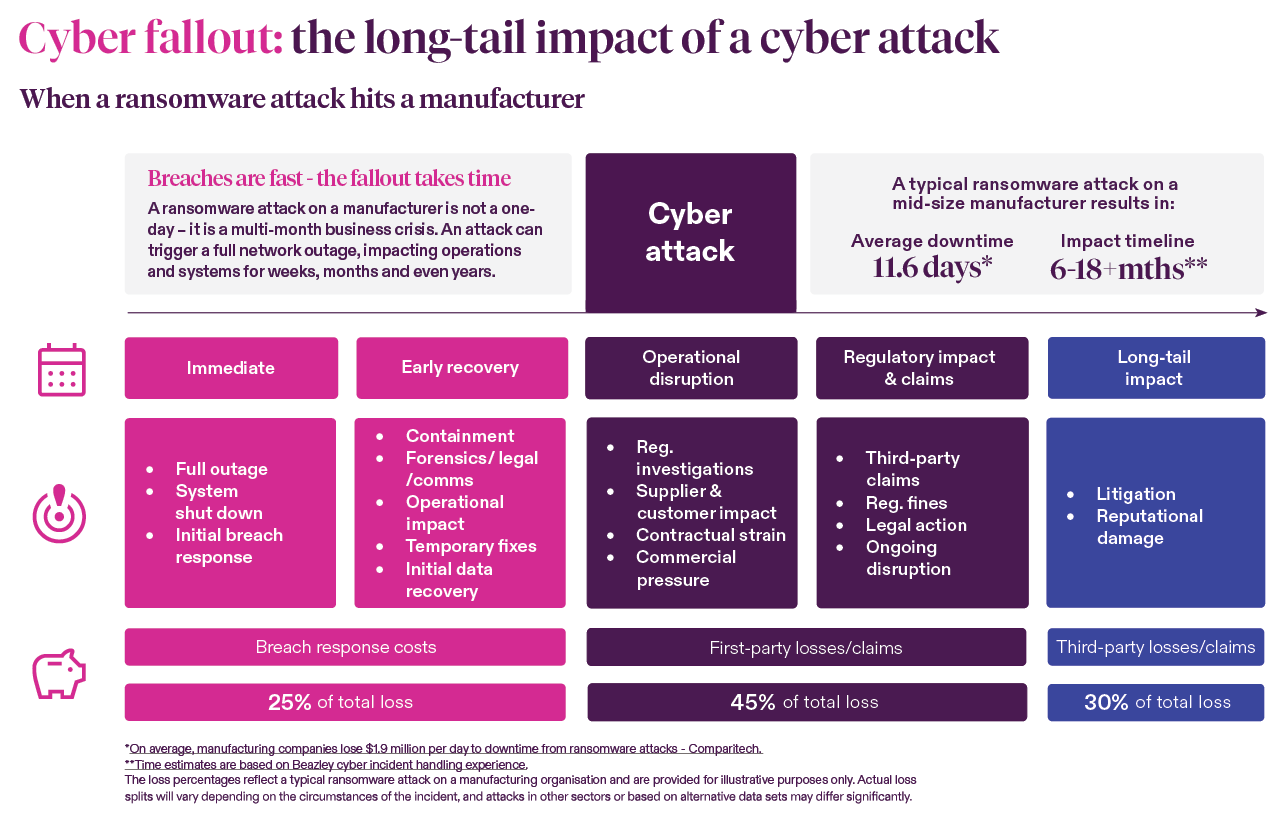
For example, downtime for an international manufacturer ranges from days to years, and the financial toll can be punishing1. Businesses require a clear understanding of their true exposure and the level of disruption they can realistically financially absorb and what they need to shift to insurance.


Belief is not reality

Many leaders remain overly confident in their resilience:

  • 78% of global executives expect full recovery following a cyber incident.
  • 82% claim strong cyber preparedness.

This confidence is increasingly misaligned with the reality of today’s threat landscape.

Case study: Small businesses, big exposure

Cyber crime is surging as economic uncertainty persists and AI-enabled criminal activity becomes more advanced. Small businesses, sole traders and micro-enterprises – already stretched thin – are now among some of the most targeted groups.

Spotlight snapshots

  • Cyber attacks now trigger full operational crises

    Not just data breaches – causing long-term disruption, multi-million dollar losses, supply chain breakdowns and elevated regulatory scrutiny.

  • Executive confidence is overly high

    AI-powered attacks are accelerating and exploiting basic weaknesses in networks and ecosystems.

  • Risk spans data, partners and physical infrastructure

    Requiring stronger governance and end-to-end visibility to remain resilient.