
Insurance is shaping access to capital
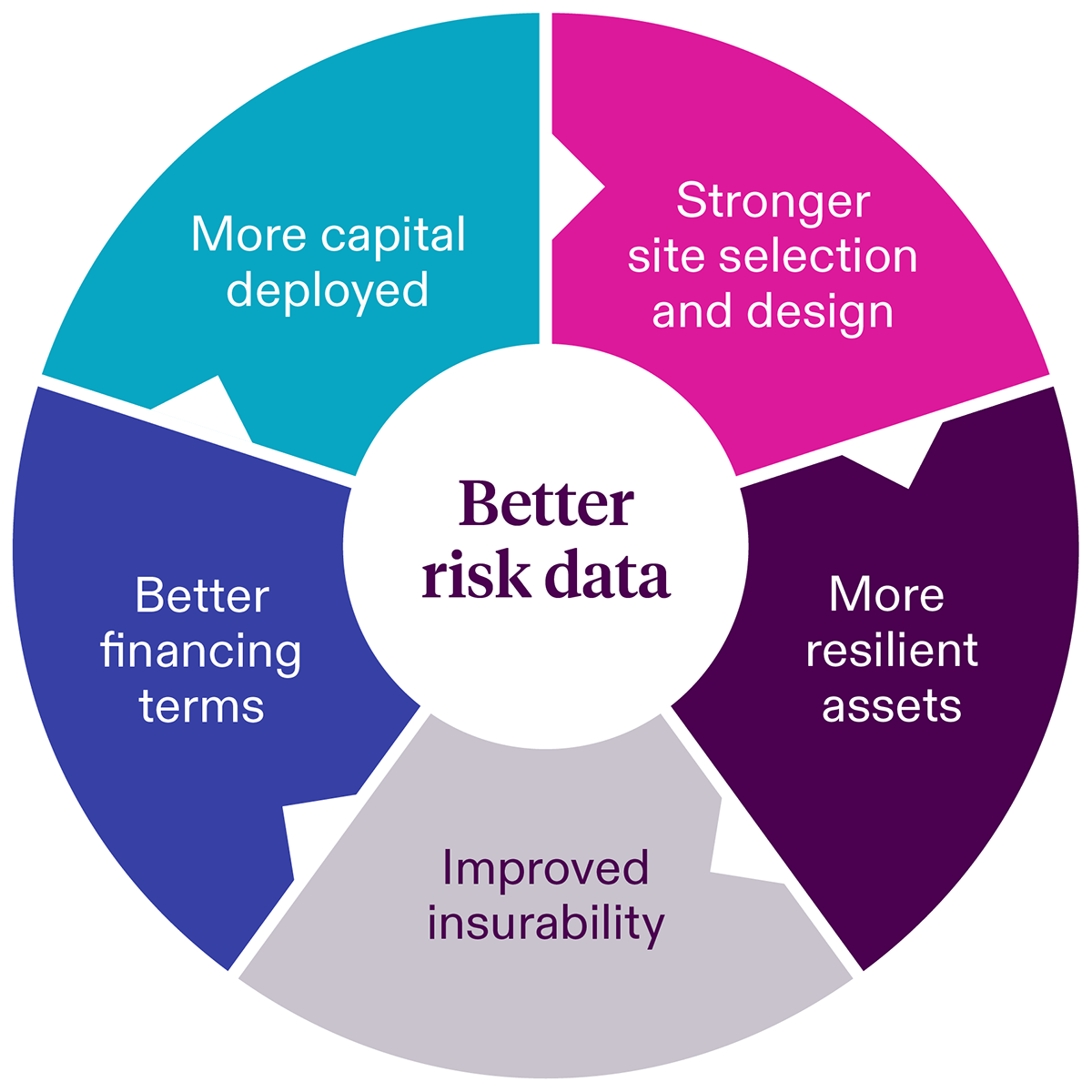
Projects need insurance to secure funding, especially with newer, under-tested technologies, geopolitical disruption and intensifying climate conditions. Where risks are unclear, terms tighten, premiums rise and projects can stall.
When insurers develop specialist solutions, they help convert uncertainty into progress. For example, cover for performance, revenue and political risk can expedite development and turn uncertainty into investible opportunities.
The energy transition is forcing the insurance industry to evolve from a reactive, siloed form of protection into an enabler of growth.
Insurance is driving better resilience
Insurance influences how assets are built and operated. Requirements around design, maintenance and risk controls help improve project quality from the outset. This moves insurance beyond claims. It becomes part of how stronger, more durable infrastructure is built from the outset.